
For geospatial & space ventures
Make your geospatial product sell. Into committees, procurement, and the long cycle.
You sell geospatial and space tech into energy, oil and gas, infrastructure, and telecom, each with its own committee and long cycle. Tell a different story for each and what you actually do gets lost. The product is not the problem; the system that carries it through never got built. I build it, and I have sold in your world.
Which of these do your buyers throw at you?
- Free with Copernicus?
- Different from Esri?
- Can we trust the provenance?
- Fits our GIS stack?
- Can we pilot first?
- Who signs off in operations?
- Where is the data from?
- Just another transformation project?
Recognize a few? Then the problem is not how you are selling. It is that this world buys differently, at every step.
The short version
Why won't enterprise buyers buy our geospatial product, even when it works?
Because a working product and a sold one are different things, and the gap is not your technology. It moves through a committee where the user who loves it does not hold the budget, and it is harder still when your product is dual-use or grant-funded, with no real market track record yet. A good product does not move on merit. It moves on a system built for how this world actually buys.
Why generic advice fails here
Same loop. Built and run differently in your world.
You already know it, even if the feed does not say it: selling geospatial and space is its own game, and the free templates and LinkedIn playbooks were written for software a buyer can try in a browser. Every company runs one commercial loop, the decisions you lock, the surfaces that carry them (your homepage, deck, and demo), the path they open, the metrics that tune it. That loop is what I build. Here every part of it plays by different rules. A few examples, not the whole map, that is the Audit:
Decisions
You are not up against a competitor. You are up against free.
Copernicus and open data are good enough until they feel the pain. So the decision we lock is the one job your product does that free cannot, priced to that, and free stops being the comparison.
Surfaces
It has to live where they already work.
If it does not sit inside the Esri and asset stack they run every day, it is a science project, not a tool. So you position it as the tool on top, adopted, not a migration they have to defend.
Path
Your "customer" cannot actually buy.
They are a transformation manager with an eighteen-month roadmap and no budget. So the path is built for proxies and long cycles, and it arms the room you are never in: provenance for the technical seat, a number for finance, a procurement-safe first step.
Metrics
You are measured on a five-year ROI you cannot prove.
Far off and easy to argue with. So the loop anchors on the one job you do now, named and measured, and every part above gets easier.
This is why a generic go-to-market advisor cannot get you there, and a template never will. They do not know your world. I have built and sold in it. The Audit maps your whole loop, and the Repeatable Sales System builds it.
I know your world
I built the product and the buying path, from the inside.
You do not pay me to learn your industry while the clock runs. At VirGeo, a Fugro geo-data venture handling marine survey, bathymetry, and geotech across the asset lifecycle, the tech and the IP were strong, but after three years of planning there was still no product a buyer could try on their own. Every trial needed a consultant in the room.
I came in as interim product and go-to-market lead. I cut the product back to what created value, rewrote the story around how customers actually work, and built a loop so the team could test instead of plan. The product started shipping and selling. I have been stuck behind every one of those gates myself, and got it moving anyway. That is what a buying path looks like, built from the inside.
I came in as interim product and go-to-market lead. I cut the product back to what created value, rewrote the story around how customers actually work, and built a loop so the team could test instead of plan. The product started shipping and selling. I have been stuck behind every one of those gates myself, and got it moving anyway. That is what a buying path looks like, built from the inside.
5 of 15
At VirGeo I led 15 conversations with qualified prospects and closed 5. Not the advisor who watched, the operator who had to make it work.
From your world
Almost none closing, to roughly one in three.
That is what the buying path did at a Fugro geo-data venture: the first real change in two weeks, the full lift in eight. Not the advisor who watched, the operator who had to make it work.
Our homepage didn't match our deck. Our deck didn't match sales. Thorsten rebuilt everything, aligned. Now prospects understand in the first minutes.
Every call, someone asks 'but which use cases?' and we end up listing every industry. It is painful, for us and for them. The work cut through it: we were completely underselling what we do, and now it clicks.
 Nader · Co-founder, Lyrasense (early-stage geo venture)
 Prospects stopped asking 'which problem do you solve?' We get to yes or no in half the time.
The bench in your world
Who I work with in geospatial and space.
You are not just getting me. In this world I work with a small network I trust, so a founder gets the whole go-to-market covered, with clean handoffs.

Emmanuel Mondon
AdviceGEO
Geospatial & EO advisor, deep-tech scout
25 years across geospatial and Earth Observation (ERDAS, Intergraph, DigitalGlobe, Maxar), Munich-based. He co-founded Space Cooperative Europe and spots founders whose product works but who cannot sell it yet.
Emmanuel on LinkedIn→
Space Cooperative Europe
SCE
The European space cooperative
The first open, independent European cooperative for the space business: 26 members and 500+ stakeholders across space, finance, and acceleration, with a funding platform and an accelerator. Munich-based, co-founded by Emmanuel.
spacecoop.eu→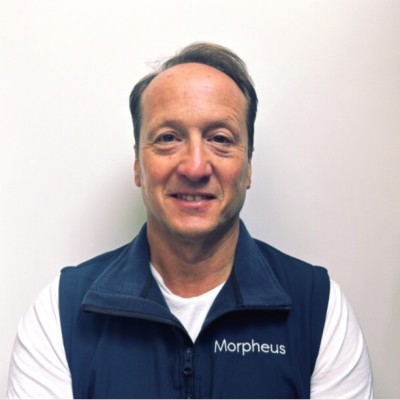
Mike Swetman
Morpheus
Go-to-market & technical talent
Places go-to-market and technical hires into startups and scale-ups, permanent or interim, with a focus on geo-data, robotics, AI, and renewable energy, so the hires already understand the space.
Morpheus→
Mitchel van Luit
AceDigital
Behavioural digital marketing
Behavioural psychology meets digital marketing: high-converting websites and customer-journey advertising built on how buyers actually decide.
AceDigital→Questions you're asking
Fair questions, answered straight.
Our buyers ask, isn't this basically free with Copernicus?
Then the positioning is selling data, when the buyer pays for a decision. Copernicus gives them pixels. It does not give them the one outcome your product delivers, provenance they can defend, or a workflow they trust. I reframe you around that job and price it, so free stops being the comparison.
They compare us to Esri, then go quiet.
Because it sounds like a migration, and teams do not sign up to rip out their stack. I position your product to live inside the Esri and asset stack they already run: the tool on top, not the switch. Adopted, not migrated to.
Every pilot wins the demo, then dies in security and procurement.
The demo was never the gate. I build the first step to clear the real one: provenance and standards for the technical seat, a number for finance, a low-risk operational trial procurement can approve. The pilot is built to survive the room, not just impress it.
We sell to multiple industries. Will you make us pick one?
No. I make you frame one bet clearly enough to act on. Then you decide, with eyes open, whether you can and want to run another in parallel. Framing one well usually makes that choice obvious.
Our cycles are 6 to 12 months. How can this help?
Fuzzy decisions add months, because the buyer needs extra calls just to understand what you do. Lock them and the cycle shrinks. The work is short; the time it saves per deal is not.
We already have a deck. Why doesn't it work?
Because it was built from decisions that were never locked, so each slide drifts. I lock the decisions first. Then the deck is built straight from those decisions, and your team delivers it the same way every time.
Start here
Start with a free read.
Send me your homepage. I read it the way your buyer reads it, and send back the first place the committee loses the thread. No call required, and it is the first step most founders start with.
Built in geospatial and space, but the system behind it is the same one I build for other founders.